Nature restoration takes place in specific landscapes, communities and ecosystems. The opportunities, constraints and impacts of restoration can therefore look very different from one place to another.
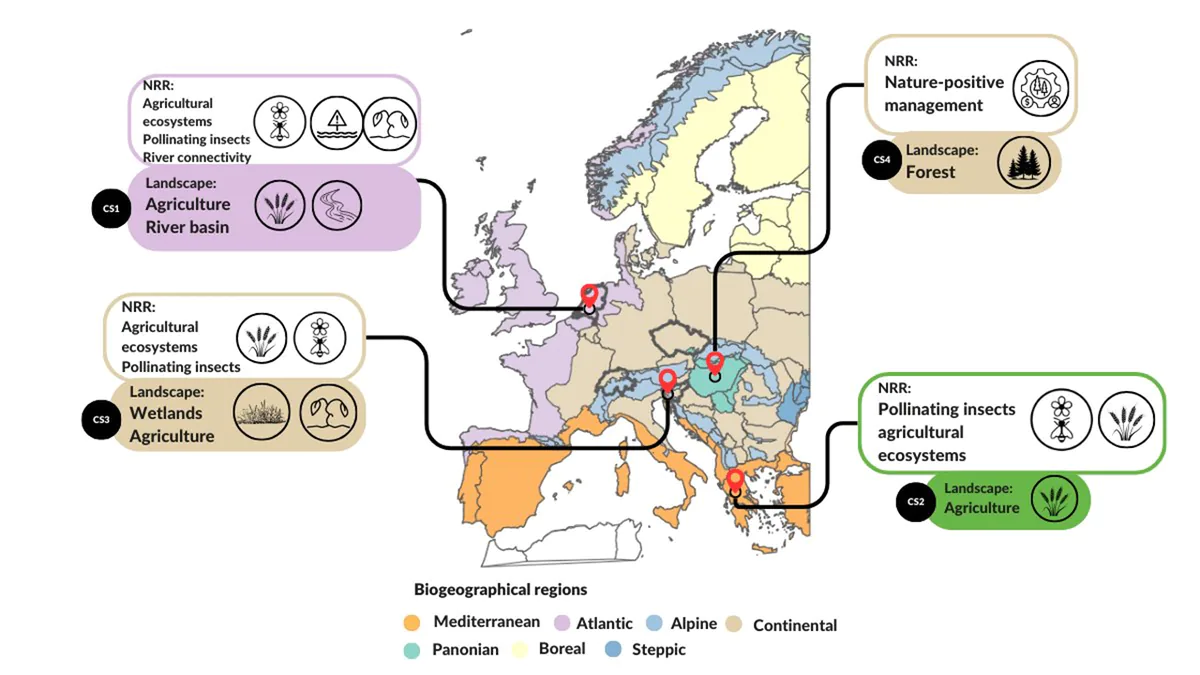
NatuRISE works with four real-world case studies across agriculture, forestry and freshwater ecosystems. These case studies connect the project’s scientific work with the people and places where restoration decisions are made. They provide contexts in which NatuRISE will co-create questions, apply and test methods, explore restoration options and translate complex evidence into decision-relevant insights.
From models and evidence to real places and real decisions.

Exploring the socio-economic implications of freshwater ecosystem restoration and the interactions between ecological objectives, land use and wider economic impacts.
Exploring restoration choices in a context where agricultural production, ecosystem condition and local socio-economic priorities need to be considered together.
Exploring how wetland and grassland restoration interacts with land management, local livelihoods and the different benefits and costs experienced by stakeholders.
Exploring the socio-economic, cultural and recreational dimensions of forest restoration and the trade-offs between different ecosystem services and land-use objectives.
1
2
3
4
5
6
Find a case study — the dimensions along which case-study evidence can be found in the Results Hub
By location
Netherlands · Greece · Slovenia · Hungary
By stakeholder
Across the four cases, NatuRISE aims to generate:
The case studies are not isolated demonstrations. They will allow NatuRISE to test how different methods and models work when confronted with real-world decision contexts, data limitations, stakeholder priorities and implementation constraints. This creates a two-way learning process across: